
Mother told to wait until child turns three before claiming income support
A single mother from England says she has been left “in limbo” after being told she cannot receive income support to help her return to work until her young child turns three, raising fresh concerns about how benefit rules and childcare policy interact for low-income families.
‘I want to work, but the system won’t let me’
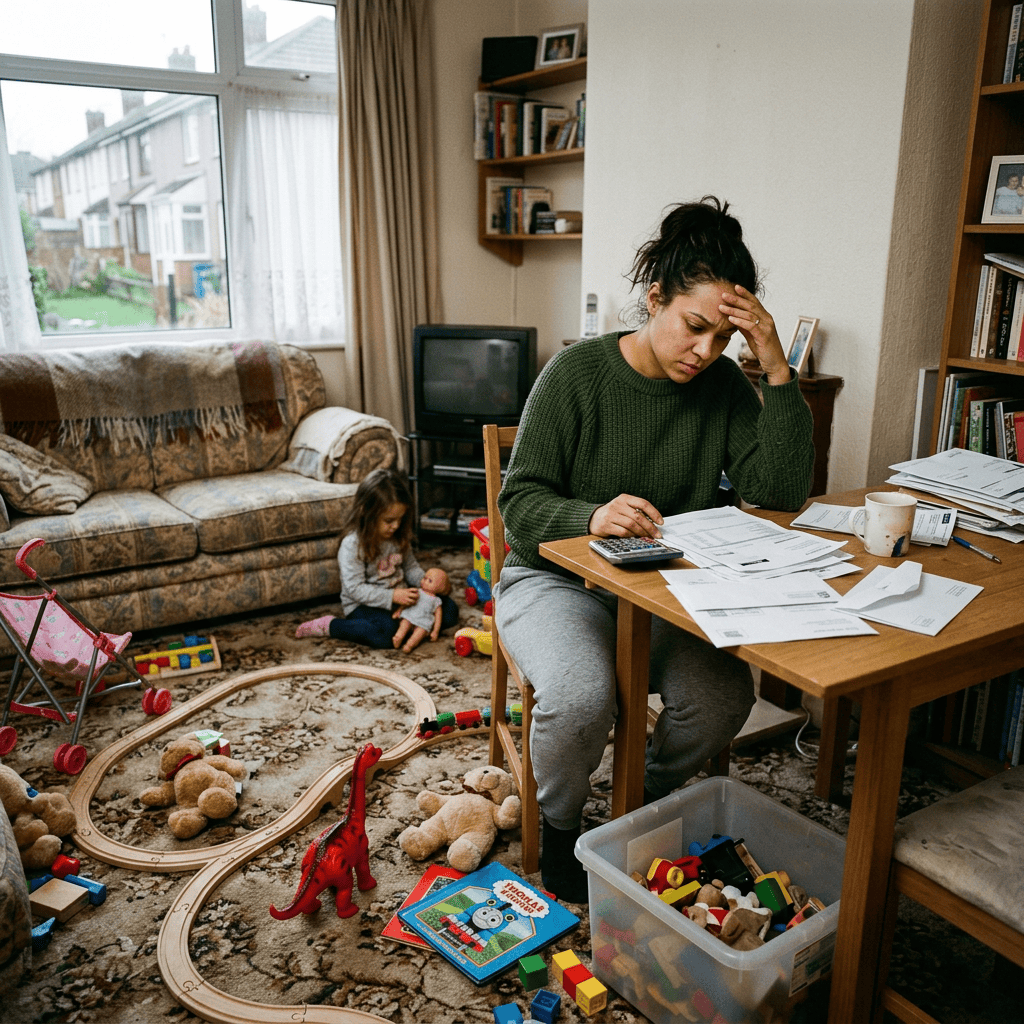
Sarah Lewis, 29, is a single mother to a two-year-old daughter. After taking time out of the workforce following the birth, she has been trying to move back into part‑time employment. But when she approached the authorities to ask about income support to help her manage the transition, she says she was told she would not be eligible until her child turns three.
“I’m not trying to avoid work – I’m actively looking for it,” Ms Lewis told this website. “What I need is some stability so I can afford childcare and actually accept a job. Instead, I’ve been told to wait until my little girl is three before I can get the support I was asking about. It feels like the system is blocking me from doing the right thing.”
She says the decision has left her facing a stark choice between taking on work that may not cover the cost of childcare or staying at home longer than she had planned. “I want my daughter to see me working and to know that work pays off,” she added. “But right now, it feels like I’m being punished for trying to get ahead.”
What the rules say on income support and childcare age thresholds
Income support and related benefits in the UK have undergone major changes in recent years, with most new claimants now moved onto Universal Credit. Lone parents and low‑income families may be entitled to different forms of help, depending on the age of their youngest child, their work status and where they live in the UK.
Under current rules, benefit conditions generally become stricter as children get older. Parents whose youngest child is under one usually have fewer work‑search requirements, while those with children aged three and above are typically expected to prepare for and actively look for work. However, the point at which parents can access certain forms of income support, or receive additional help with childcare, can also be linked to a child turning three – particularly when it comes to early years education hours and support for childcare costs.
This creates a complex landscape for parents who want to move into work earlier than the system anticipates. Families like Ms Lewis’s can find that they do not qualify for the kind of income top‑ups they expected until their child reaches a particular age threshold, leaving them to bridge the gap alone.
Impact on working parents and single mothers
Charities have long warned that age‑linked benefit rules, combined with the high cost of childcare in the UK, can act as a barrier to work for parents of very young children. Single mothers are among those particularly affected, as they often have less flexibility to share caring responsibilities or rely on a second income.
For a parent like Ms Lewis, who does not have family nearby to help with childcare, the lack of early financial support can turn a theoretically positive step back into work into a financial risk. Taking up a job with irregular hours or low pay may mean paying out more in childcare than she earns, at least until her daughter is eligible for more funded childcare or she can access a fuller package of income support.
“The message I’m getting is basically, ‘wait until your child is three and then we’ll talk’,” she said. “But my bills and rent aren’t waiting. I don’t want to get into debt or give up on work, but I’m being told the help isn’t there yet.”
Reactions and what it means for other families
Campaigners say Sarah’s experience is not unique, and that more parents are coming forward describing similar situations where they feel caught between benefit rules and the realities of childcare costs. Advice organisations report that many parents are confused about what they can claim and at what stage, particularly when their child is under three and not yet eligible for the full range of free childcare hours.
Some family support groups argue that greater flexibility is needed so that parents who want to work sooner can do so without falling through the cracks. They warn that without enough targeted help in the early years, the government’s wider aim of boosting employment among parents and cutting child poverty will be harder to achieve.
For families in situations like Ms Lewis’s, the immediate concern is how to get through the next year. “I know there are other mums in my shoes,” she said. “We’re told work is the best route out of poverty, but when we try to follow that advice, we’re told to wait. It doesn’t make sense.”
Government policy context
The government has introduced a series of changes aimed at getting more parents into work, including expanding funded childcare hours for younger children and increasing some childcare support within the benefits system. Ministers argue that reforms to Universal Credit are designed to make work pay and ensure that support is targeted at those who need it most.
However, policy experts say the interaction between benefit rules, work requirements and childcare provision remains complicated, and that gaps can open up for parents of very young children. They have called for clearer guidance, simpler rules and better communication so that parents like Ms Lewis understand what help is available and are not discouraged from returning to work.
The Department for Work and Pensions has been approached for comment on Ms Lewis’s case and the wider concerns it raises about support for parents seeking to return to work before their child turns three.


Leave a comment