Wildfires in Spain and France Strain Communities and Emergency Services
As the Mediterranean fire season peaks in late July 2026, large wildfires in Spain and France are forcing evacuations, damaging homes and landscapes, and putting sustained pressure on firefighting services across both countries. While conditions vary by region, prolonged heat, dry vegetation and gusty winds have combined to create a high fire risk typical of mid-summer in southern Europe.
Spain: Multiple Fronts Across the North and Mediterranean Coast
In Spain, authorities are responding to a series of major and smaller fires stretching from the northwest to the Mediterranean coast. Regional governments report active fire fronts in parts of Galicia, Castilla y León, Catalonia and the Valencian Community, with dozens of additional smaller incidents being monitored nationwide.
Scale and regions affected
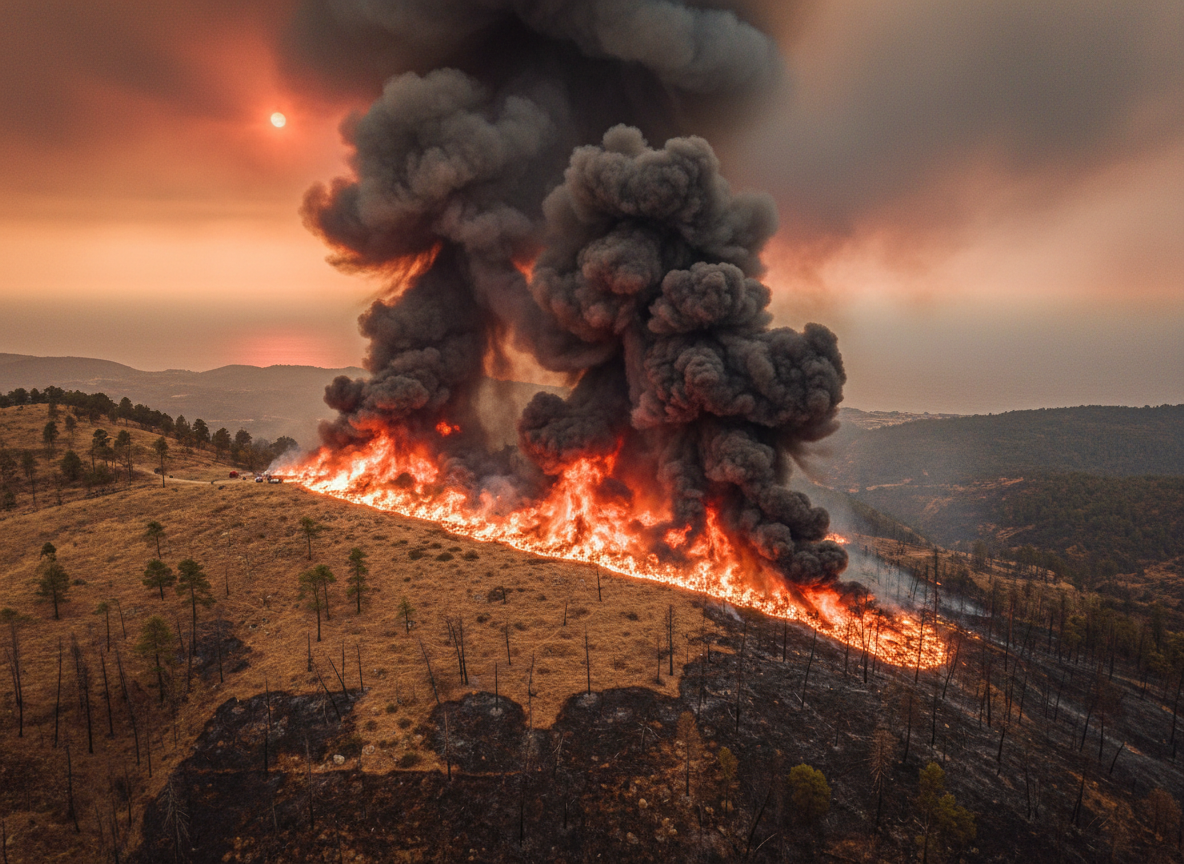
Firefighters in northern regions have been battling blazes in rural and forested areas where steep terrain and variable winds complicate ground operations. In Galicia and Castilla y León, fires have burned through pine and mixed forest, shrubland and agricultural margins, coming close to several small towns and villages. On the Mediterranean coast, fires in Catalonia and the Valencian Community have affected hillsides near popular tourist areas and second-home developments, prompting heightened vigilance from local authorities.
Spanish emergency services estimate that, across all active incidents this week, several thousand hectares have been affected, though precise figures continue to evolve as containment lines are reinforced and burned areas are mapped. Authorities are emphasizing that the situation remains dynamic, with new ignitions still possible under hot, dry conditions.
Evacuations and community impact
Local officials have ordered precautionary evacuations in several municipalities where flames approached homes or critical infrastructure. Residents of scattered rural hamlets and isolated properties have been moved to temporary shelters set up in schools, sports halls and community centers. In touristic areas, some visitors have been asked to leave campsites and rural accommodations as a safety measure, with authorities coordinating transport and temporary lodging.
So far, most reported damage involves outbuildings, agricultural installations, fencing and sections of forest rather than dense urban neighborhoods. Power cuts have occurred in some affected zones as lines were shut down preventively or damaged by fire. Road closures on regional and local routes have disrupted travel, especially in hilly interior areas, while major highways and rail lines have largely remained open with speed restrictions where smoke reduced visibility.
Firefighting response
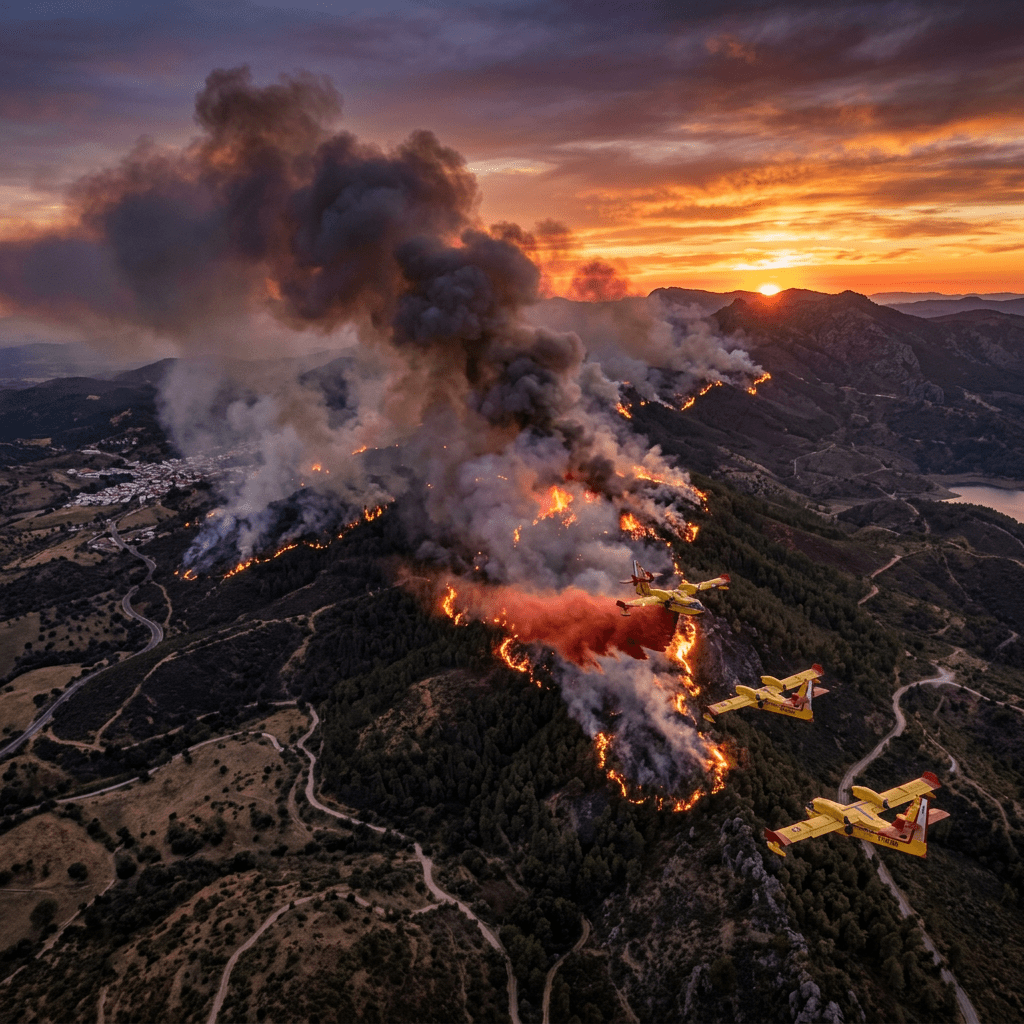
Spain has deployed hundreds of firefighters, forest brigades and military emergency personnel, supported by water-dropping aircraft and helicopters. Regional teams are coordinating with the national Military Emergency Unit (UME) in the most complex incidents, particularly where fires threaten populated areas or protected natural sites. The country’s aerial fleet, including Canadair planes and regional helicopters, has been flying repeated missions from coastal bases and inland reservoirs to contain expanding fire fronts.
Authorities stress that suppression efforts are being closely guided by real-time weather forecasts and fire behavior modelling. With temperatures expected to remain high and humidity low in many regions, command centers are planning for a protracted campaign, rotating crews to reduce fatigue and pre-positioning resources near areas identified as high risk.
Environmental concerns
Beyond the immediate threat to homes and infrastructure, the fires in Spain are burning through forests, shrublands and agricultural mosaics that support significant biodiversity. Conservation groups are warning that repeated burns in some regions can hinder natural regeneration and make slopes more vulnerable to erosion and flooding during autumn and winter rains. Smoke plumes have also affected air quality locally, prompting health advisories for sensitive groups in some areas downwind of active fires.
France: Fires in the Southwest and Mediterranean Departments
In France, wildfires have been reported in several departments, with a concentration of activity in the southwest and along parts of the Mediterranean coast. Officials have highlighted the combined effect of heatwaves, periods of strong wind and dry vegetation as key drivers of the current fire danger, in line with typical late July conditions in the region.
Areas affected and scale of damage
Departments in the southwest, including forested areas inland from the Atlantic coast, have seen significant fires in pine plantations and heathland. In some locations, flames have approached residential zones at the forest edge, prompting rapid intervention from local firefighting units. Along the Mediterranean, including parts of Provence and Languedoc, smaller but fast-moving fires have burned through scrub and woodland near roads and residential areas, often driven by gusty winds.
French authorities report that several thousand hectares have been affected nationally during this phase of the fire season. While detailed assessments are still underway, early reports indicate damage to forest stands, pastureland and some rural properties. Many popular beaches and coastal resorts remain open, but access to nearby forests and scrubland has been restricted in multiple departments to reduce ignition risks.
Evacuations, closures and public safety measures
Authorities have ordered evacuations in neighborhoods and campsites where fire lines advanced toward homes, particularly in fire-prone zones near dense pine forests. Temporary shelters have been opened, and municipal services are providing food, water and information to displaced residents and tourists. In some coastal communes, access to forest tracks and hiking routes has been closed, and outdoor activities that could generate sparks or flames are restricted during peak risk periods.
Public information campaigns are reinforcing long-standing advice in southern France: avoiding open flames, carefully managing barbecues, respecting cigarette bans in natural areas and adhering strictly to road closures and evacuation orders. Local radio, social media channels and municipal alert systems are being used to provide frequent updates as fire conditions evolve.

Firefighting forces and aerial support
France has mobilized thousands of firefighters (sapeurs-pompiers) and specialized forest fire units, supported by a fleet of water-bombing aircraft and helicopters. Canadair planes and other fixed-wing aircraft have been deployed from bases along the Mediterranean and Atlantic coasts, conducting repeated drops over active fronts in coordination with ground crews building containment lines and protecting structures.
Authorities are emphasizing early detection and rapid initial attack to prevent small fires from growing into large-scale incidents. Surveillance flights, lookout posts and ground patrols are all being used to spot smoke quickly, while regional and national coordination centers track resource deployment across departments experiencing high fire danger.
Impacts on ecosystems and rural economies
Large fires in the southwest are affecting commercial forestry operations, including pine plantations that support local employment. In addition, traditional grazing areas and small farms near forest margins face damage to fences, barns and pasture, adding to the economic strain on rural communities. Environmental organizations have raised concerns about the loss of habitat in fire-prone shrublands and forests that host a variety of Mediterranean species.
French officials note that while many Mediterranean ecosystems have evolved with periodic fire, the frequency and intensity of events in some locations can challenge natural recovery processes. Post-fire stabilization of slopes and reforestation, where deemed appropriate, are expected to be priorities once the current emergency phase subsides.
International cooperation and regional support
Both Spain and France are operating within broader European frameworks for mutual assistance during the wildfire season. Through European Union civil protection mechanisms, countries can request and offer support in the form of aircraft, firefighting teams and technical expertise when national resources come under strain. So far this season, coordination centers have been monitoring needs closely, with several European partners placing assets on standby for rapid deployment should conditions worsen.
Cross-border cooperation is particularly important in the Pyrenees and along major transport corridors where smoke and potential fire spread can affect both sides of the frontier. Joint training exercises held in recent years are helping emergency services in Spain and France to share protocols, communications systems and lessons learned as they manage complex incidents in real time.
Climate and seasonal context
The current wildfires in Spain and France are unfolding against a backdrop of hot, dry summer weather that is typical of the Mediterranean climate, but they also reflect broader concerns about long-term fire risk in southern Europe. Scientists have documented that higher average temperatures and more frequent heatwaves can extend the length of the fire season and dry out vegetation, increasing the likelihood that fires, once ignited, will spread rapidly.
Authorities in both countries continue to stress prevention as a central pillar of their strategies: managing vegetation near communities, adapting building codes in high-risk zones, investing in early warning systems and promoting public awareness of fire-safe behavior. While year-to-year conditions vary, emergency planners are preparing for summers in which high fire danger may become more common, and are calling for sustained efforts to reduce underlying climate risks and improve resilience in the communities most exposed to Mediterranean wildfires.


Leave a comment